
O. Reg. 632/05 has significant legal implications for a very large number of businesses in the province, however in our experience many businesses are also either unaware of the various operational and legal implications associated with O. Reg. 632/05 or do not completely understand their responsibilities in relation to this regulation.
This is not necessarily a matter of negligence. For example, Tundra Rescue frequently meets and assists program, project and health and safety managers who both realize they need to, and also want to, do something about confined space safety issues in their operations, but are not clear about exactly either what they should be doing or how they should implement O. Reg. 632/05 compliance within their own specific business context.
In some cases this starts from just being able to define what is and also what is not a “confined space”.
What is a Confined Space?
According to the regulation, O.Reg 632/05, a “confined space” means:
A fully or partially enclosed space,
- That is not both designed and constructed for continuous human occupancy, and,
- In which atmospheric hazards may occur because of its construction, location or contents, or because of work that is done in it.
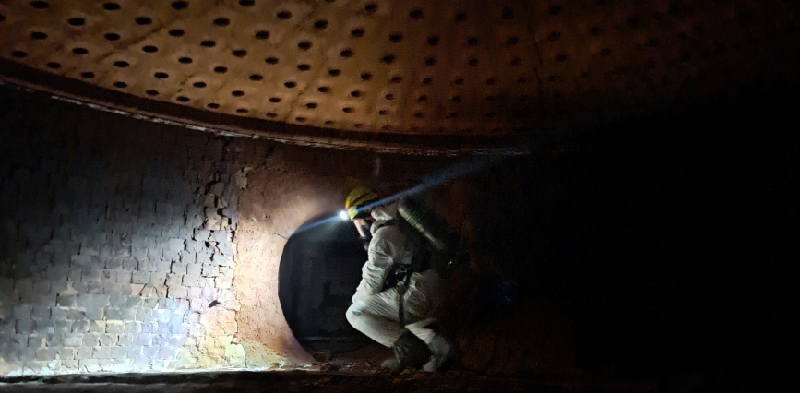
This is a broad definition and there will be a vast number of different types of spaces, vessels and containers in Ontario that could fall under the regulations requirements across the workplaces of almost every industry. Tundra Rescue’s client base also reflects this diversity.
Clarifying “Continuous Human Occupancy” and Location Hazards
What does “continuous human occupancy” mean exactly? And how can we tell if the “location” of a space might introduce an atmospheric hazard?
The Ministry of Labour Guidelines on this topic, which are designed to assist the risk holders compliance with O. Reg. 632/05, provide more clarity about the regulation. But, finding the time to properly interpret and apply these regulations and guidelines can be difficult while juggling the various pressures of a busy workplace. This is, after all, just one issue out of dozens of others that a busy manager may be required to address.
Given that the operational, moral and legal penalties for getting confined space safety wrong are potentially so high in Ontario, some businesses will choose to bring in a specialist like Tundra Rescue to assist them assess, plan and deliver their approach to confined space safety, including the provision of confined space rescue teams.
Core Employer Obligations Under O. Reg. 632/05
To ensure full compliance under Ontario Regulation 632/05, employers and constructors must establish a structured confined space program:
- Written Confined Space Program (Section 5): Conduct a hazard assessment for every space and develop a written program containing entry plans and control measures before any worker enters.
- Permit System & Entry Coordination (Section 7): Issue written entry permits detailing the space location, potential hazards, atmospheric testing results, and safety precautions.
- Atmospheric Testing & Monitoring (Section 18): Perform pre-entry testing and continuous air quality monitoring for oxygen levels, flammable gases, and toxic contaminants.
- Mandatory Emergency Response & Rescue (Section 11): Establish an equipped, trained, on-call standby rescue team prior to entry. (Relying solely on 911 does not meet legal requirements in most instances).
What can go wrong and how we can help?
Let’s take a quick look at a case study to show how this works in practice.
In mid-2021, Tundra Rescue received a request from a new customer to help them with the following:
- Identify (or confirm) any confined spaces in their facility, and,
- Clarify their requirements to ensure safety and compliance
Following a consultation process where we provided a confined space safety assessment and procedural advice, this customer also opted to use Tundra Rescue’s confined space standby rescue services. As well, during one of our first field deployments to that customer’s facility, an entry took place into a newly identified confined space which the customer had not previously recognized.
During normal operations, the space held only inert (edible) materials. It was made of stainless steel, was cleaned thoroughly and regularly, and had no obvious sources of atmospheric hazard. However, when our technicians tested the atmosphere before that first entry they discovered a dangerous amount of carbon monoxide was contained within the confined space.
The customer might easily have made the mistake of determining that this was not a confined space, based on an inexperienced interpretation of the regulation. Thankfully though, they performed necessary due diligence by bringing in an expert to be sure, and in doing so successfully controlled a significant hazard.
Frequently Asked Questions
What is the difference between OHSA and O. Reg. 632/05?
The Occupational Health and Safety Act (OHSA) provides the overarching legal safety obligations for Ontario workplaces, whereas O. Reg. 632/05 is the dedicated regulation setting explicit compliance rules for confined space hazards within the province of Ontario.
Does O. Reg. 632/05 apply to construction sites?
Yes. O. Reg. 632/05 applies across industrial establishments, construction projects, mining operations, and healthcare facilities where confined spaces exist.
Can 911 be used as a primary rescue plan under Section 11?
In almost all cases, no. Local fire and emergency services are rarely equipped or legally designated to serve as a workplace’s primary standby confined space rescue service under O. Reg. 632/05.
What is the difference between a “Restricted Space” and a “Confined Space” under O. Reg. 632/05?
A restricted space is an enclosed space where entering or exiting is difficult, but it does not contain an atmospheric hazard. However, if the work performed inside (like welding, painting, or using solvents) introduces airborne contaminants or oxygen displacement, the location automatically gets reclassified as a confined space, requiring full compliance under O. Reg. 632/05.
Get in Touch
If you have doubts about whether O. Reg. 632/05 applies to your business, or aren’t sure how to apply the regulation to your unique confined spaces or operational processes please do contact us. We can assist you in building and maintaining your confined space compliance in the most appropriate way to suit your specific operations and projects.